



Maharah Urban-Tech Bootcamp Demo Day: Digital Solutions for Smarter, More Sustainable Cities
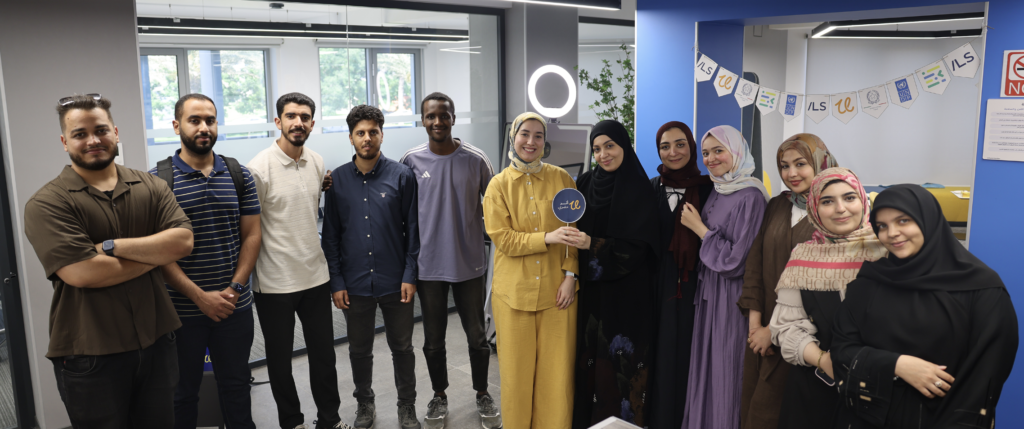
The Maharah Urban-Tech Bootcamp concluded with its final Demo Day, where participants presented four innovative digital solutions developed to address real urban challenges in Tripoli after three intensive weeks of training, teamwork, and expert mentorship.
Demo Day was more than an opportunity to showcase projects. It provided a platform for participants to test their solutions in front of government representatives, partners, and experts, while presenting their prototypes, future development plans, and the potential for implementing these solutions in real-world urban contexts.
From Ideas to Implementation
The four solutions presented during Demo Day were the result of three weeks of intensive training and multidisciplinary collaboration.
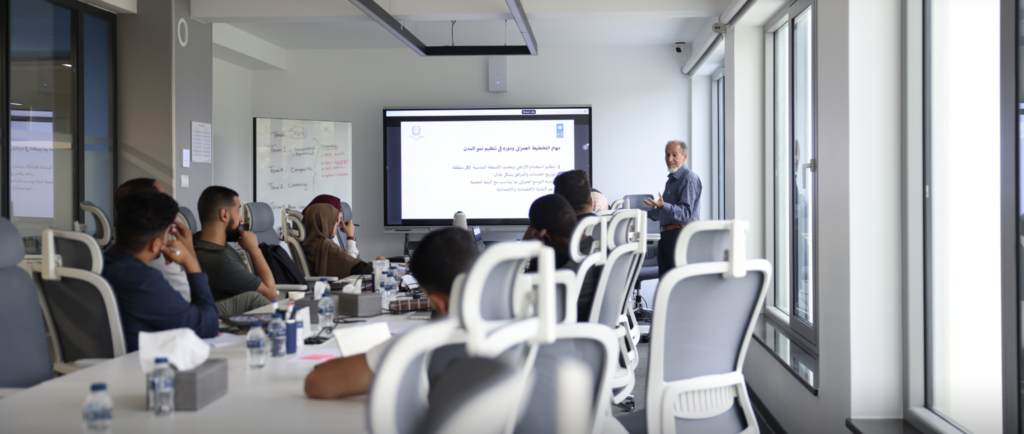
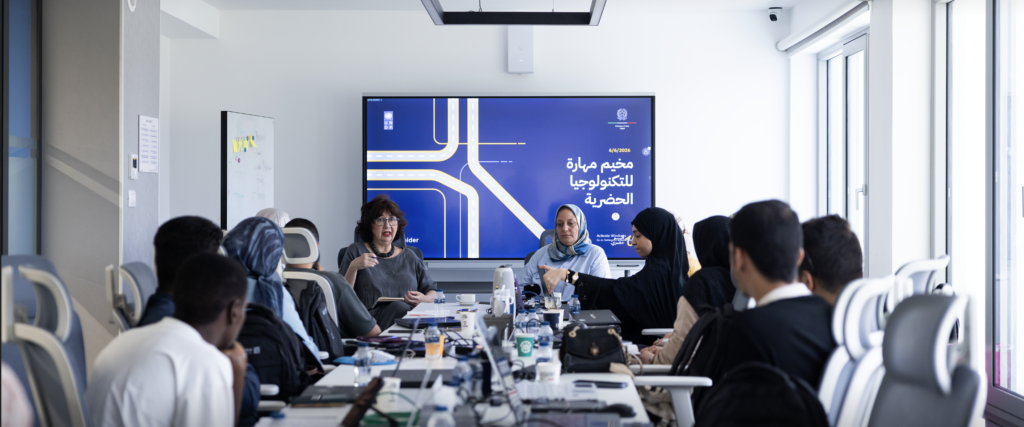
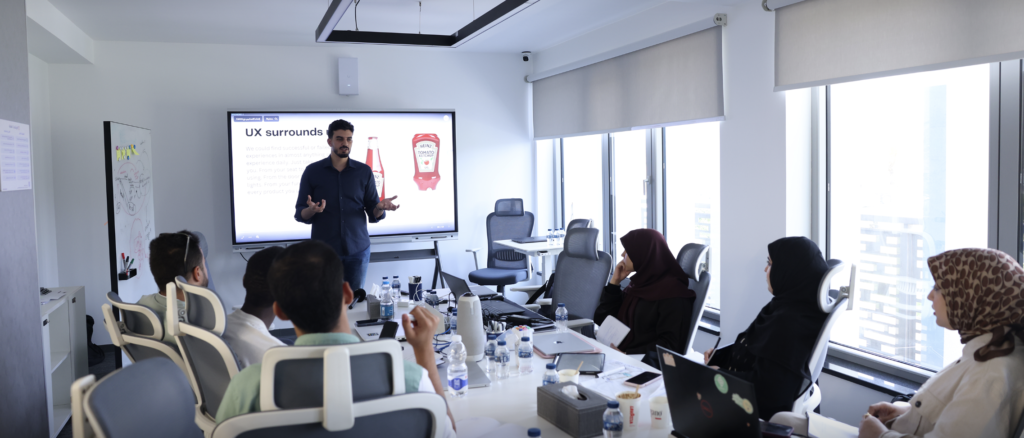
Participants completed a program that brought together urban technology, urban planning, design thinking, user experience design, digital solution development, and business models.
Throughout the bootcamp, they explored the foundations of sustainable development, analysed urban challenges, identified user needs, and investigated the root causes behind the issues they aimed to address.
This process enabled the teams to develop solutions grounded in reality, centred on people, and shaped by innovation, feasibility, and the potential for future implementation and growth.
From Urban Context to Digital Solutions
Tripoli formed the starting point of the Maharah Urban-Tech Bootcamp experience. Participants focused on four major urban challenges identified during the needs-assessment phase:
- Improving access to urban services and procedures
- Addressing mobility and traffic congestion
- Supporting land-use planning and urban decision-making through data
- Preserving urban heritage, improving access to it, and highlighting its cultural value
In response to these challenges, the teams developed four digital solutions:
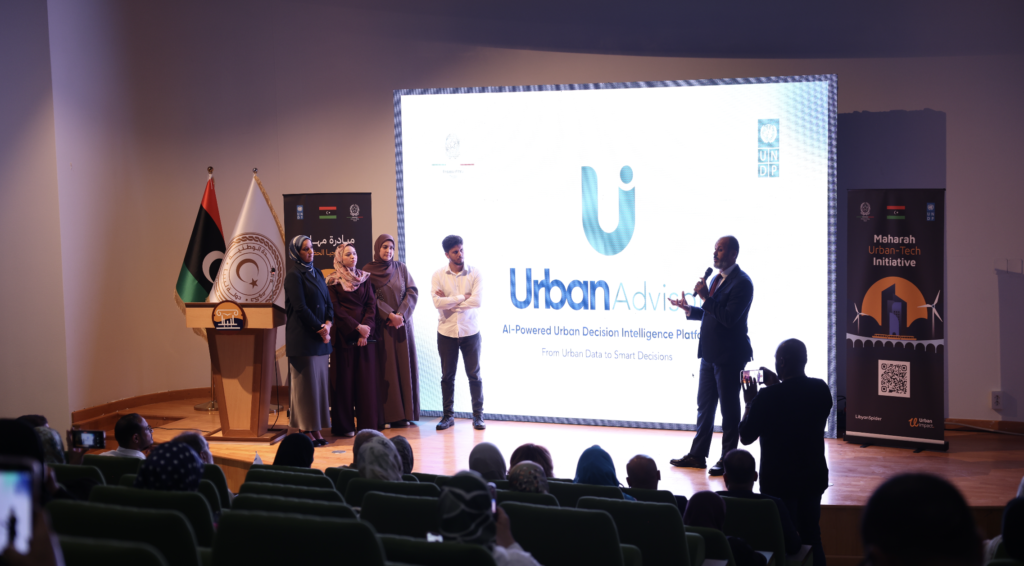
- Urban Advisor
A data-driven platform that uses spatial analysis to support urban decision-making and help citizens and investors access clearer information about locations, land use, services, and available opportunities. - Mosaic
A digital platform dedicated to promoting heritage and cultural sites. It offers an interactive experience that helps visitors and interested users explore these locations and access reliable information about them. - Rakna
A digital parking-management solution designed to help users identify available parking spaces, reduce the time spent searching for them, and improve the parking experience in busy urban areas. - Dalilak
A digital platform that simplifies access to urban services and procedures by providing a practical guide to the steps, requirements, and essential information related to frequently used services.
Together, these solutions demonstrate the participants’ ability to use technology to address real urban challenges through prototypes that combine innovation, user needs, and the potential for implementation and further development in partnership with relevant institutions.
The Final Stage of Solution Development
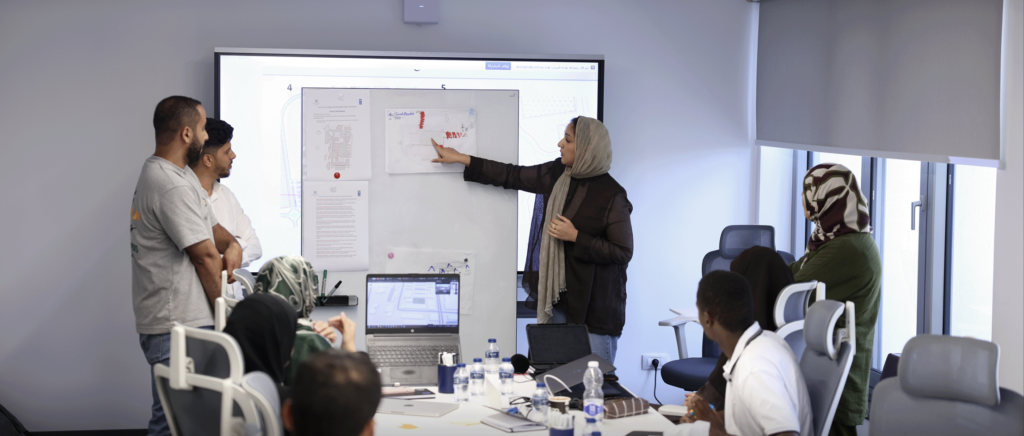
During the final week, the teams moved from developing their initial ideas to refining their solutions and preparing them for the final presentation.
Participants focused on defining their value propositions, exploring suitable business models, understanding financial sustainability, and presenting their projects clearly and professionally.
Storytelling and pitching sessions also helped participants turn their ideas into compelling narratives that explained the problem, who is affected by it, how the solution works, and the impact it could create within the city.
By the end of this stage, the projects were no longer early concepts. They had evolved into prototypes and developing solutions built on a deeper understanding of Tripoli and the needs of its residents.
Demo Day: Presenting Solutions to Experts and Stakeholders
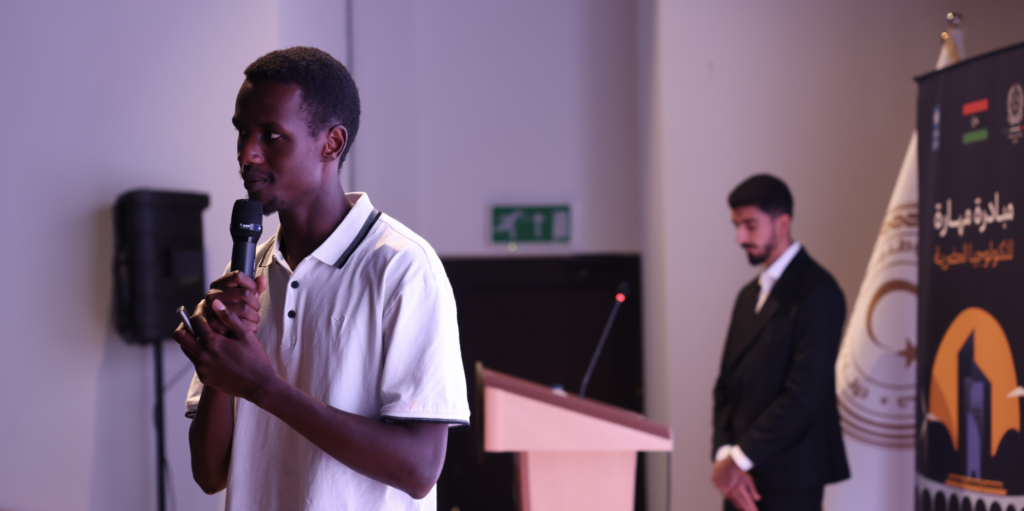
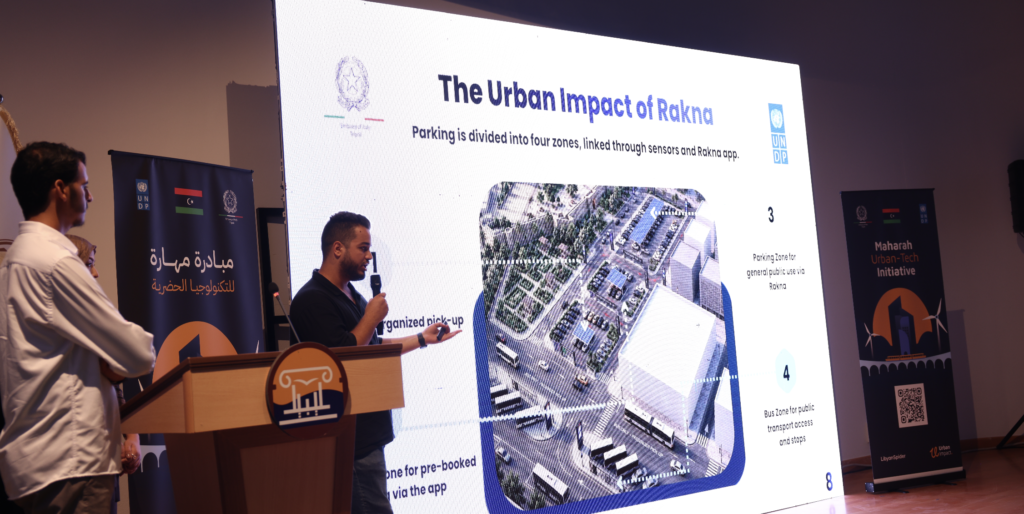
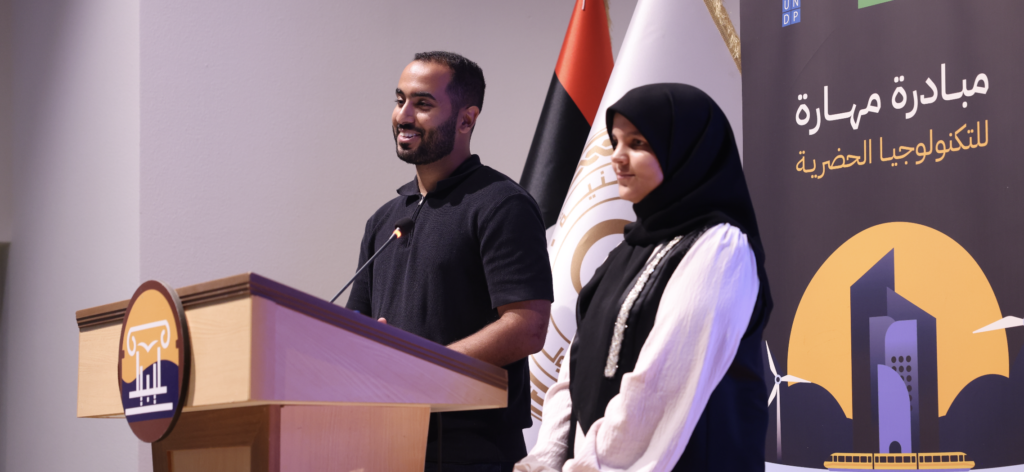
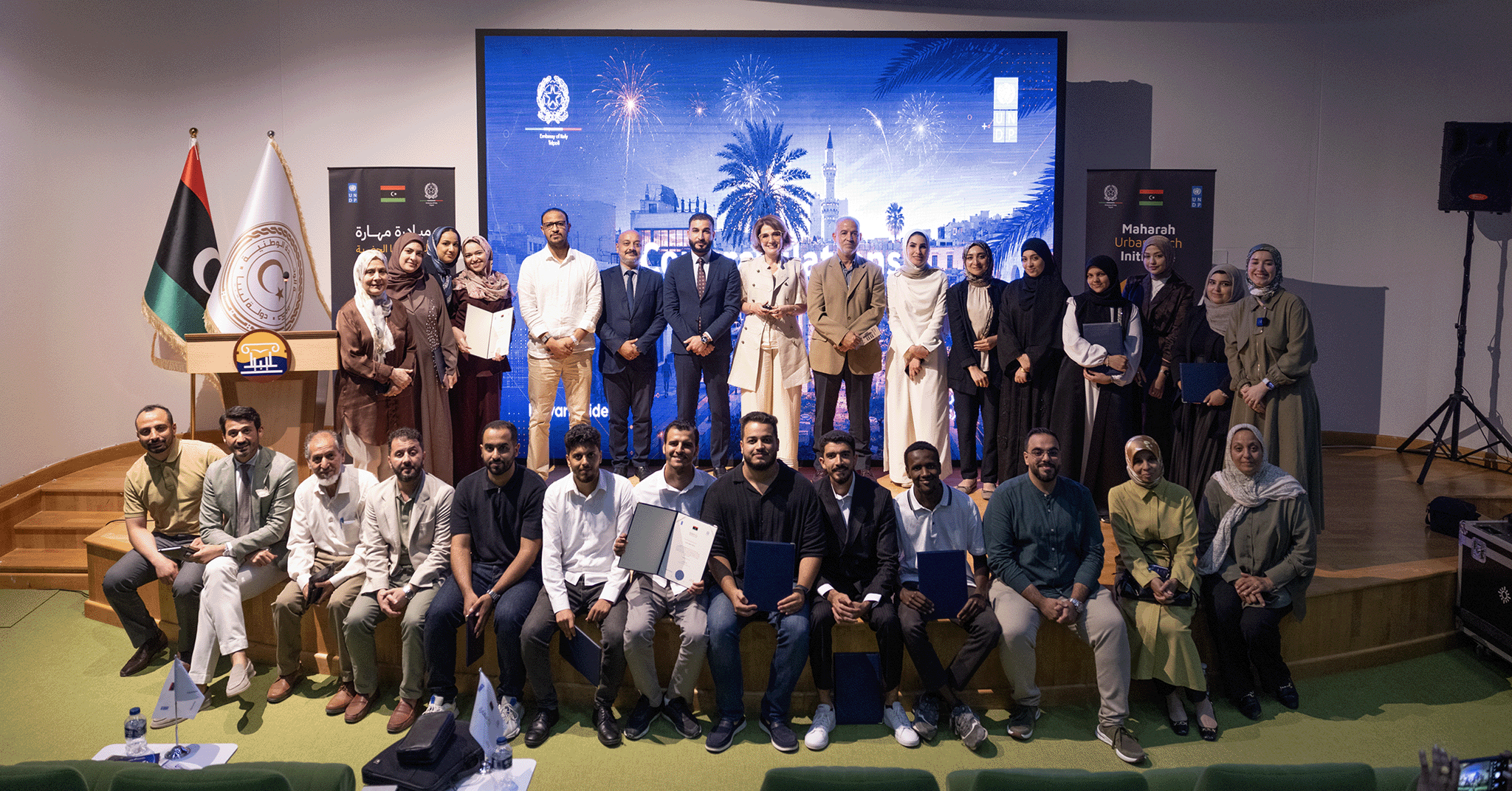
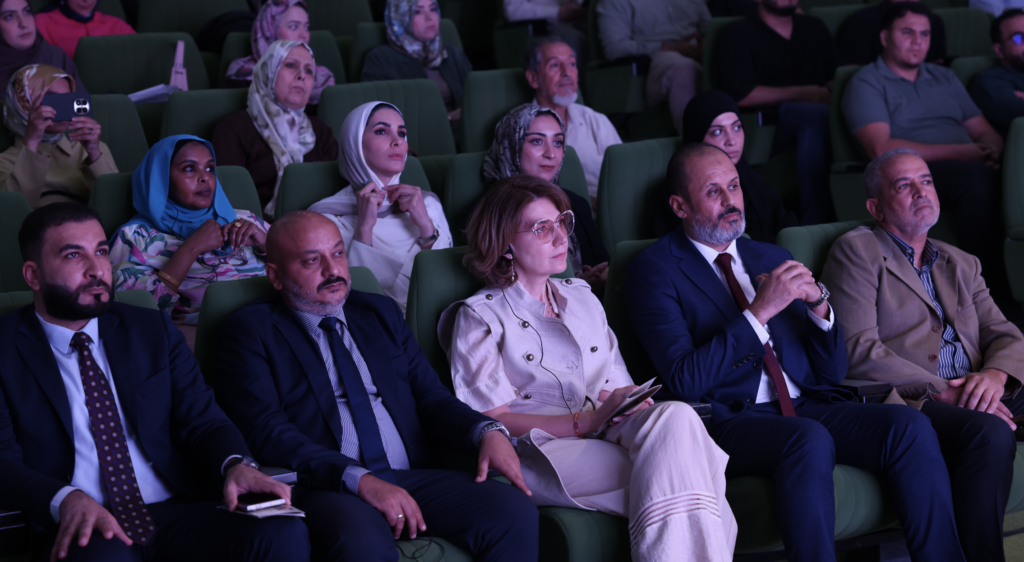
During Demo Day, the participating teams presented their final projects and prototypes before the United Nations Development Programme Resident Representative in Libya, Dr. Sophie Kemkhadze, the Minister of Housing and Construction, Eng. Issam Al-Tamouni, and representatives from Tripoli Central Municipality, the Department of Antiquities, the Libyan Architecture Authority, the Libya National Museum, as well as partners and professionals working in urban technology and innovation.
Each team presented the urban challenge it addressed, the methodology used to develop its solution, the resulting prototype, the proposed business model, future development plans, and its vision for implementation in a real-world setting.
A panel of experts in urban planning, technology, and business strategy evaluated the projects according to several criteria, including the teams’ understanding of the urban challenge, the quality of the technical execution, feasibility, scalability, and the overall quality of the presentation.
An Impact Beyond Competition
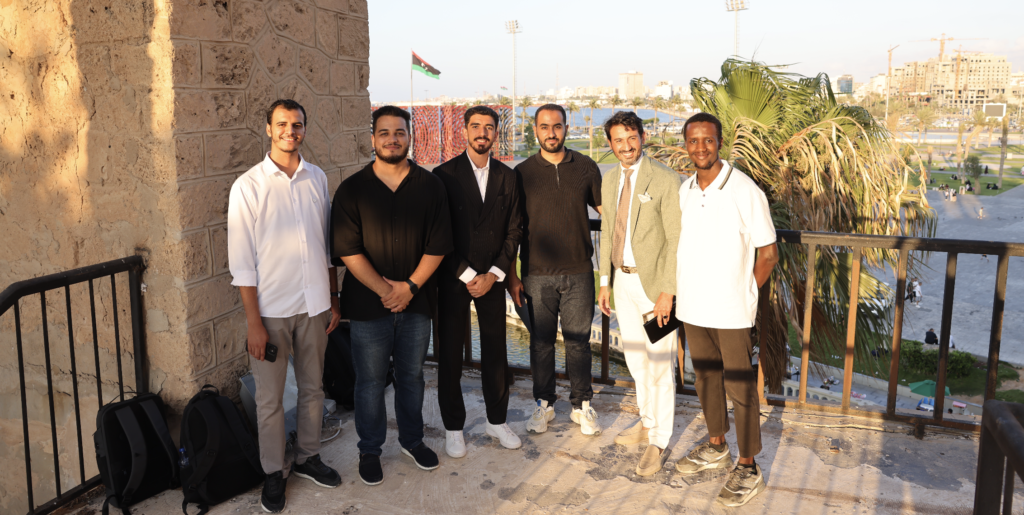
The value of Demo Day extended beyond selecting a single winning project.
Every team presented an idea, a prototype, and a solution that reflected a genuine journey of learning, collaboration, and development.
Each team reached the final stage with a deeper understanding of the city’s challenges, the needs of its users, and the role technology can play in creating applicable urban solutions.In this sense, all participating teams were winners through the progress they achieved, the effort they invested, and their ability to transform ideas into projects with the potential to create meaningful impact.
The event concluded with Urban Advisor receiving first place in recognition of its data-driven and spatial-analysis solution for supporting urban decision-making, as well as its promising potential to address important challenges related to urban planning.
The Beginning of a New Phase
Demo Day did not mark the end of the Maharah Urban-Tech Bootcamp. Instead, it represented the beginning of a new phase in the development of the solutions created by the participants.
The next step is to strengthen opportunities for collaboration with relevant institutions and support the transformation of these concepts and prototypes into projects that can be further developed and implemented.
The Maharah Urban-Tech Bootcamp demonstrated that urban innovation does not depend on technology alone. It requires the integration of urban knowledge, research, multidisciplinary collaboration, and partnerships with institutions.
Through this approach, young professionals can create solutions that respond to the real needs of cities and contribute to their development priorities.
The Maharah Urban-Tech Initiative is supported by UNDP Libya, funded by the Government of Italy 🇮🇹, and implemented by Libyan Spider.